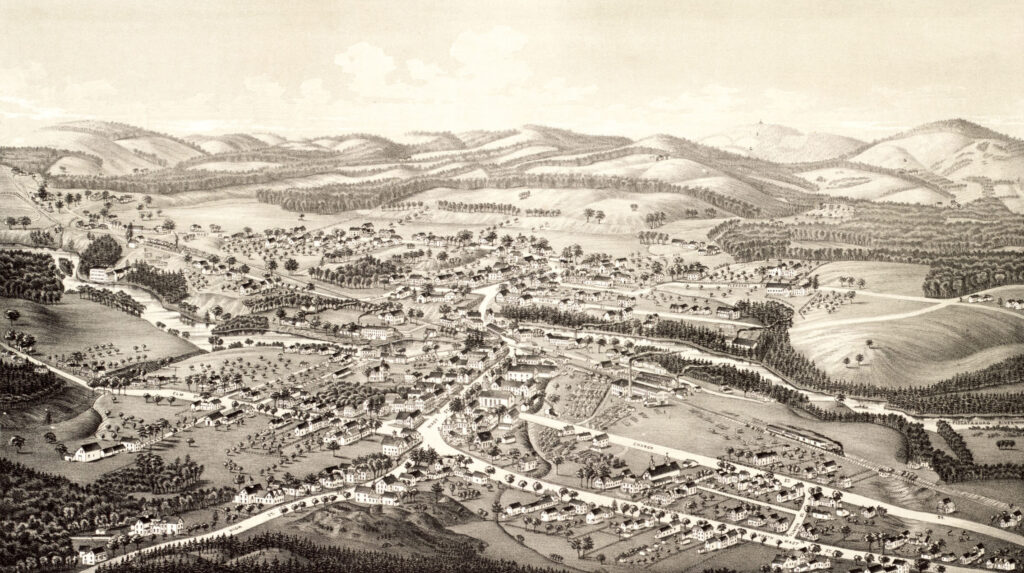
Bird’s-eye view of Goffstown in 1887
(Library of Congress)
The Goffstown Village Water Precinct is one of two water precincts in Goffstown. The GVWP is the older of the two, having been established in 1885 in the wake of a town fire that prompted residents to establish protections for the future. The bounds of the GVWP were identified and established after a June 1885 vote, followed by fundraising for the purchase of firefighting equipment and the construction of reservoirs.
A water precinct is a local government group created to provide water and sewage services for a specific geographical area within a town. They are governed by elected officials who oversee the water quality and its related infrastructure.
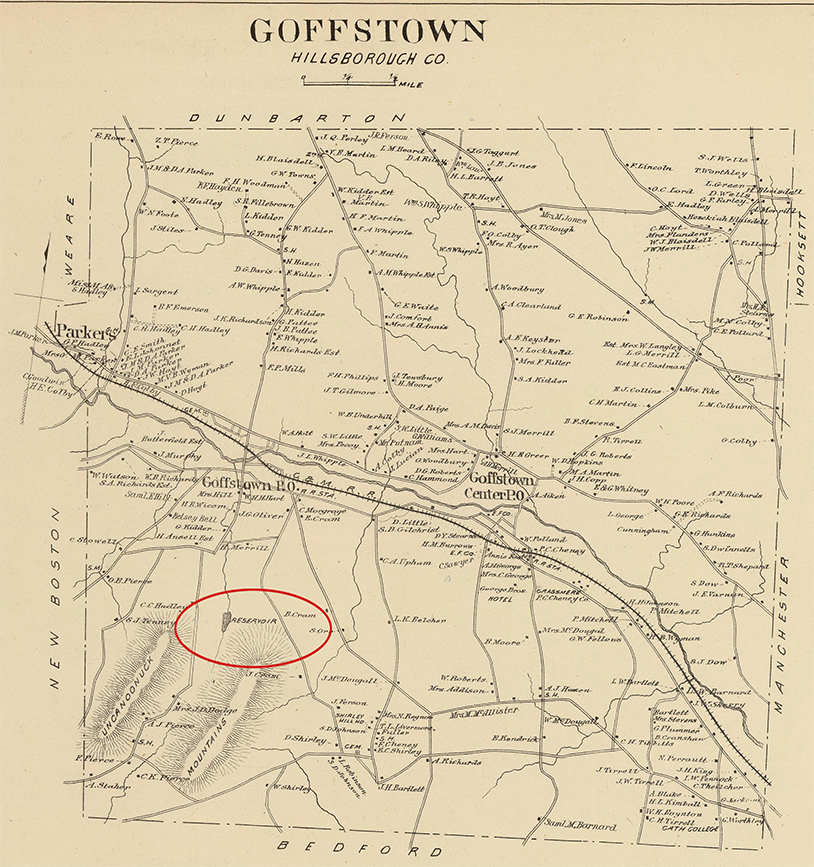
1892 Hurd Map with highlight on reservoir and Whittle Brook
D.H. Hurd & Co., David Rumsey Historical Map Collection
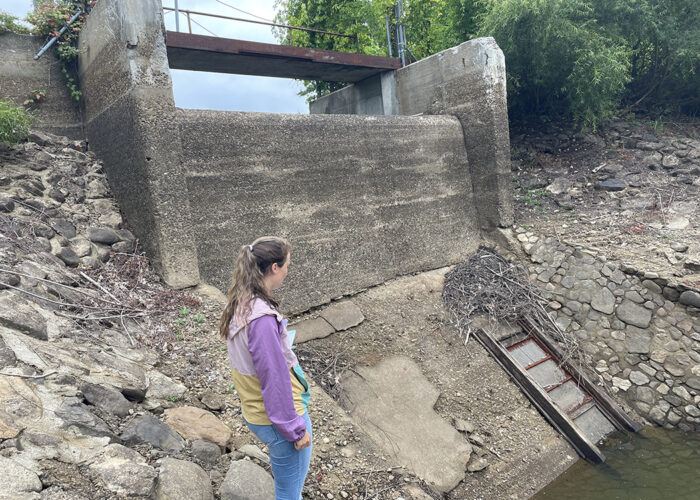
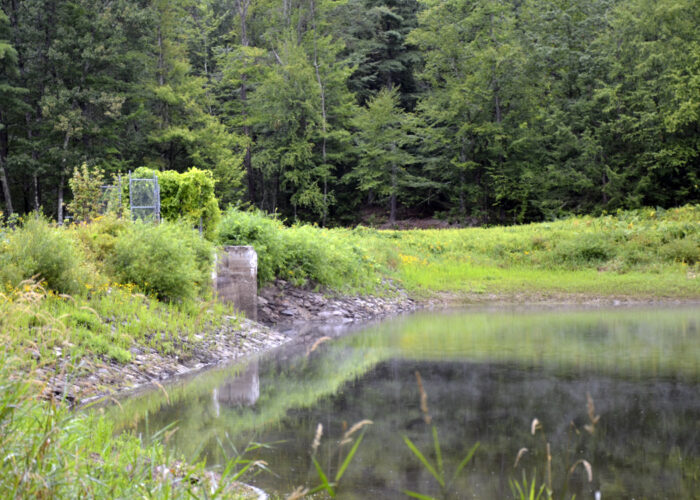
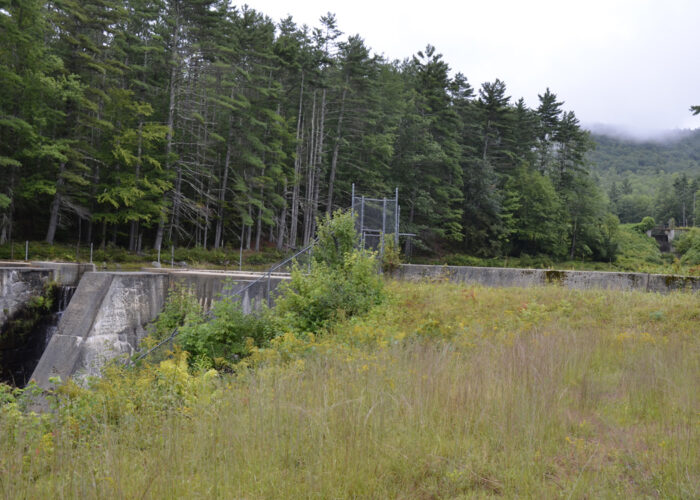
In April 1891, the state legislature authorized the Goffstown Fire Precinct to establish a waterworks system for the purpose of providing drinking water and firefighting measures. This required the construction of a dam on Whittle Brook that formed the Lower Reservoir, along with the pipes carrying the water to town. The new water supply system also enabled them to construct a series of fire hydrants. The dam was completed in November 1891. It is a concrete and stone masonry gravity structure, which was later modified by raising the crest and reinforced with stabilizing buttresses on the downstream side.
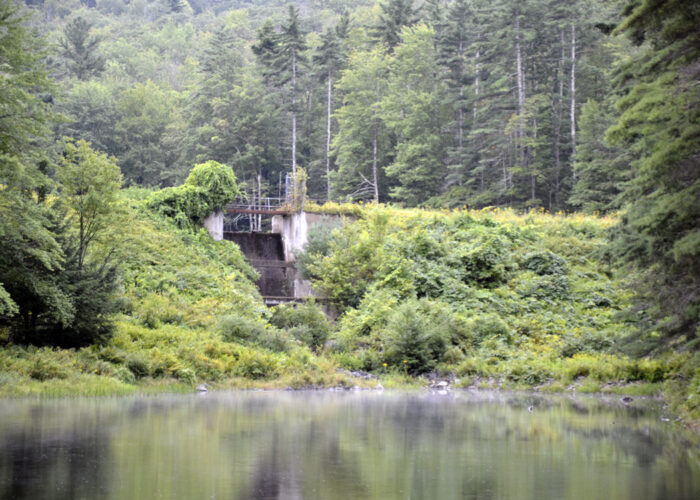
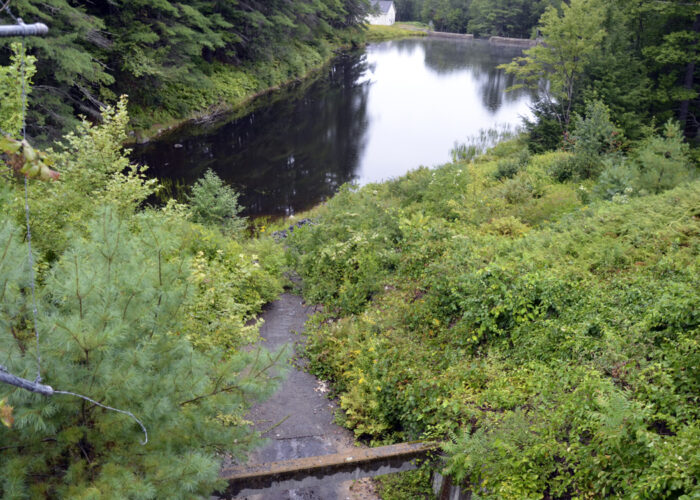
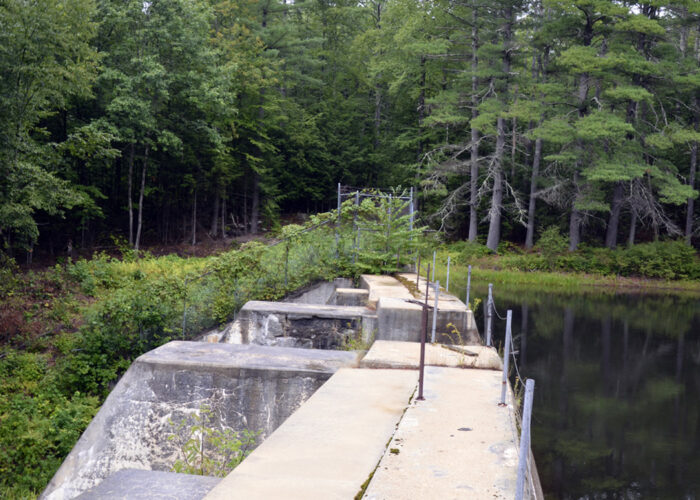
Goffstown Upper Reservoir Dam
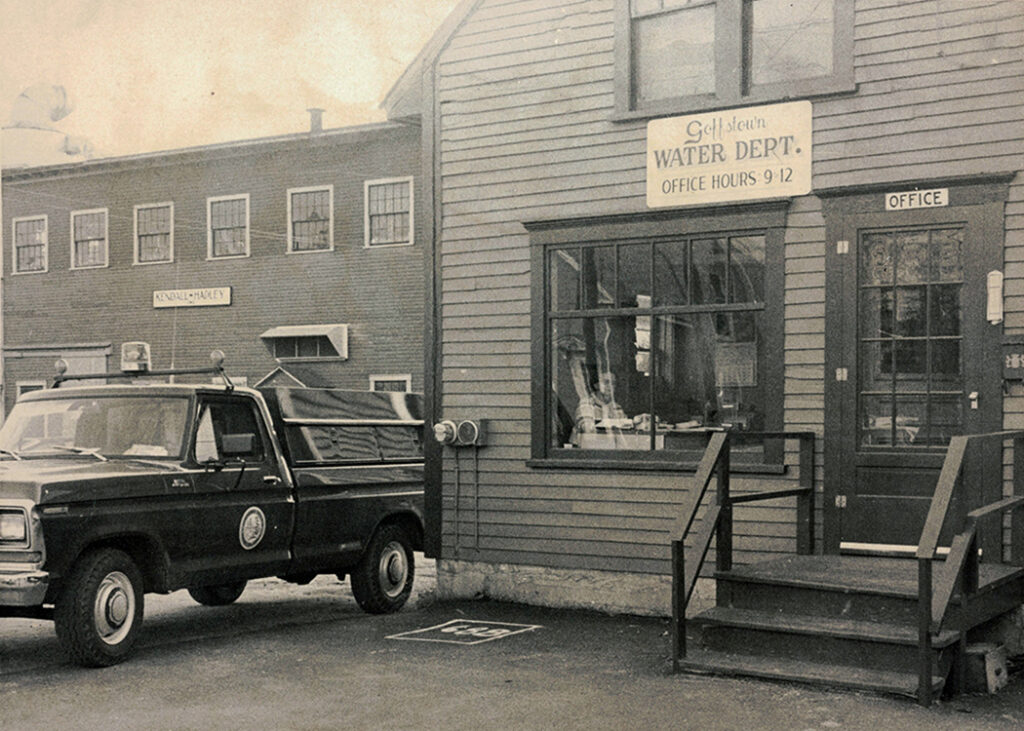
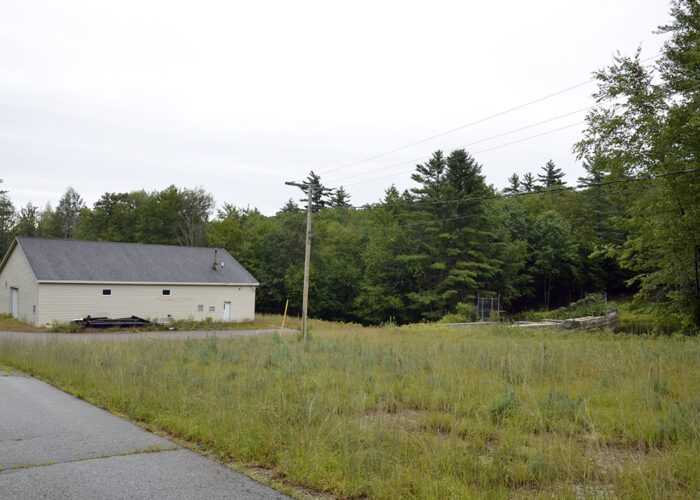
The GVWP rented this office on East Union Street for several decades in the mid-twentieth century until 1993. They eventually obtained their present office on 183 North Mast Street in 2005.
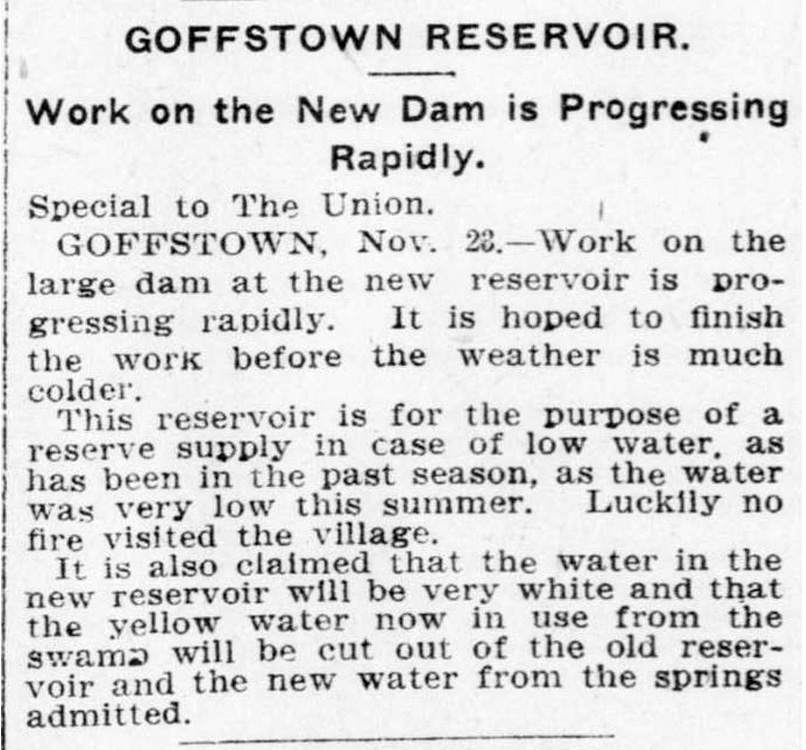
New Hampshire Farmer and Weekly Union article
(November 29, 1905. Library of Congress)
1905-1906
The Upper Reservoir Dam was constructed just upstream of the Lower Reservoir to create a second, larger reservoir. Little information has come to light about the dam’s construction, since early records were destroyed in a 1928 Town Hall fire. The reservoir was built to be an extra supply of water in the event of low water or drought conditions. Construction was completed by January 1906.
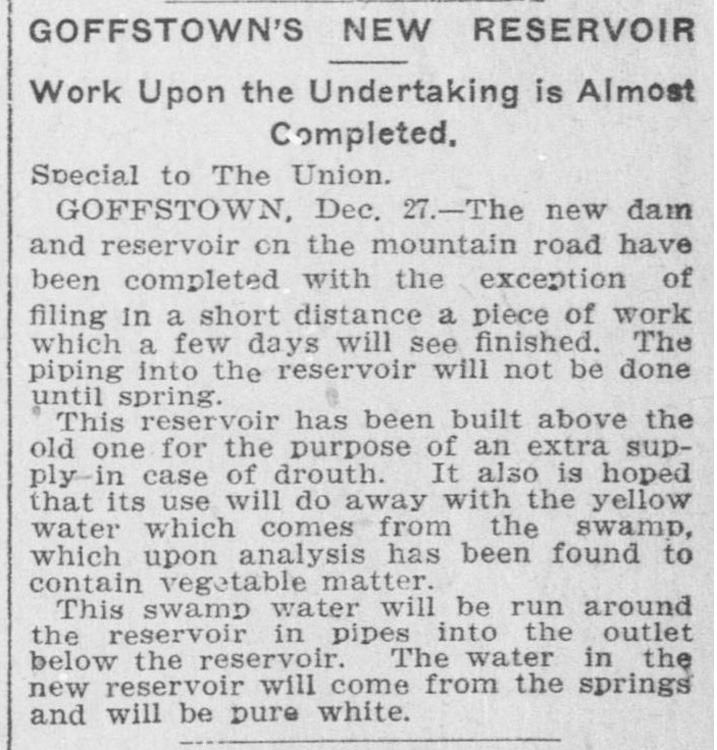
New Hampshire Farmer and Weekly Union article
(January 3, 1906. Library of Congress)
1936 Flood Damage and Rebuilding
In the spring of 1936, heavy rain and snowmelt created massive flooding in many parts of New England. The extra water entering the reservoir created exponential pressure on the concrete walls, which eventually failed and gave way. Although the dam had a spillway to account for rising water levels, it wasn’t designed to withstand such an unexpected weather crisis. The Upper Reservoir Dam was one of many dams to be heavily damaged by the flooding and needed extensive reconstruction.
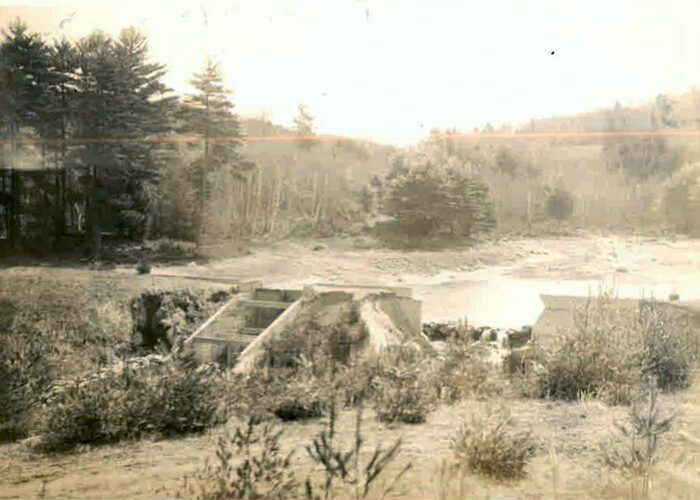
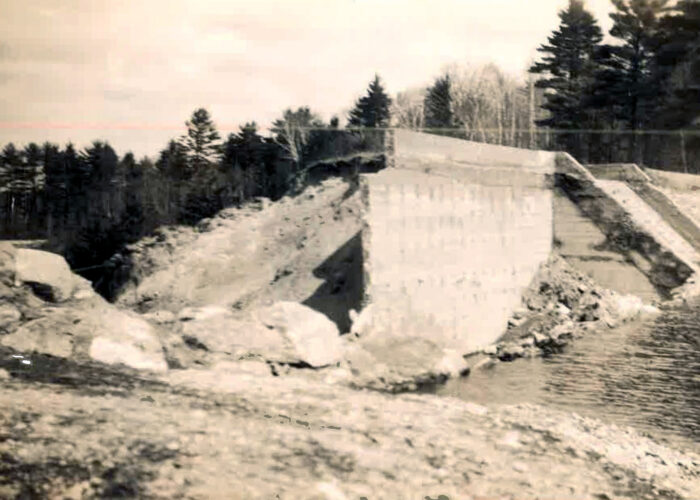
The breach was 36’ wide, 19’ deep, and near vertical due to the concrete core wall
After the flood, the Precinct received $10,000 from the Works Progress Administration (WPA) and nearly $7,000 from the town for repairs to the dam. At this time, the dam was enlarged to prevent another such failure.
1949 Alterations
In 1949, the Water Commissioners Board appointed a committee to investigate methods and costs of creating an even greater supply of water for the Village Precinct. In the end, they decided to increase the capacity of the existing Upper Reservoir to provide more water and greater storage for periods of drought.
The redesign raised the height of the dam and extended its length, at a cost of approximately $15,000.
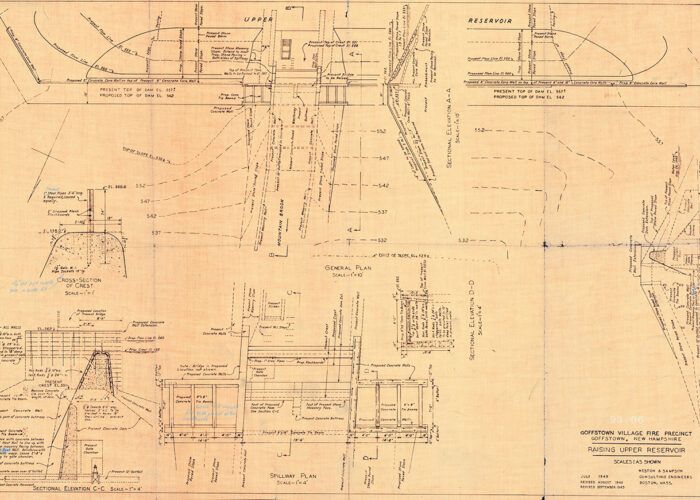 1949 Plan
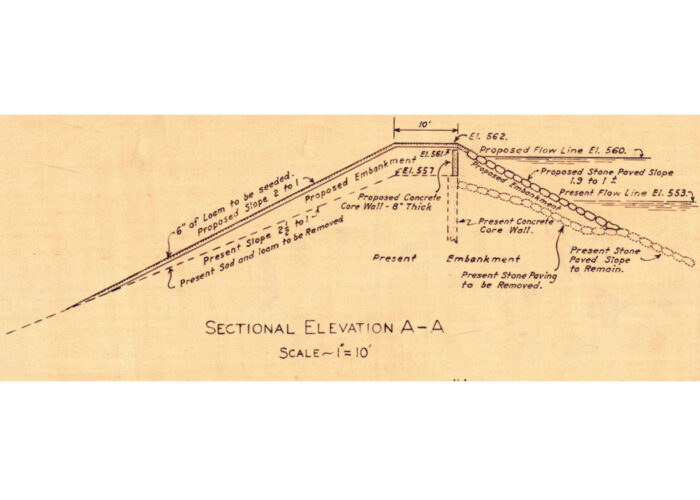
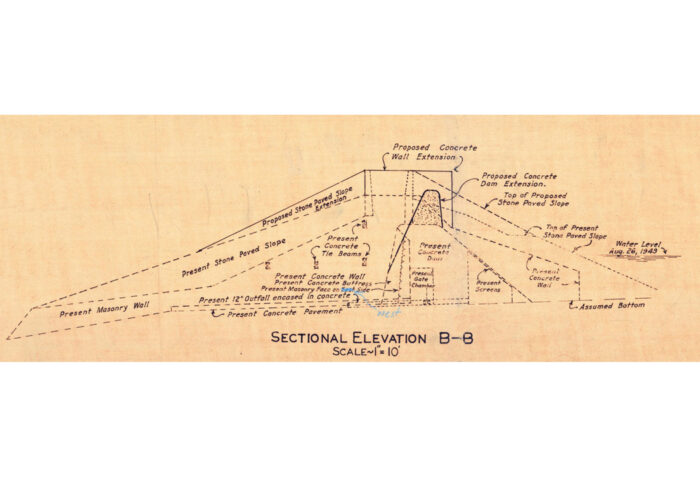
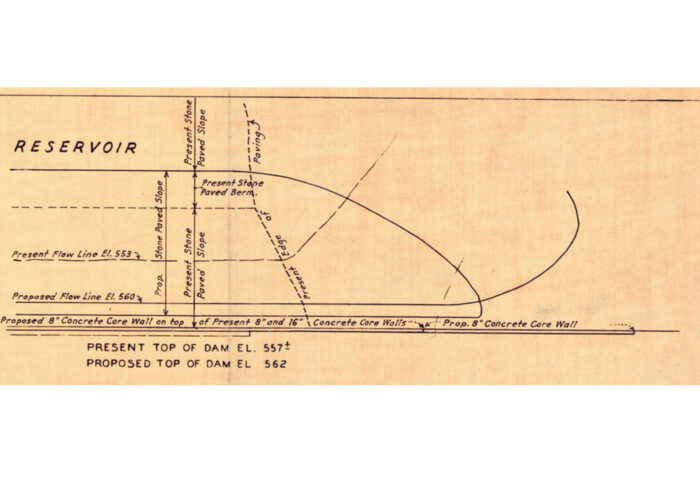
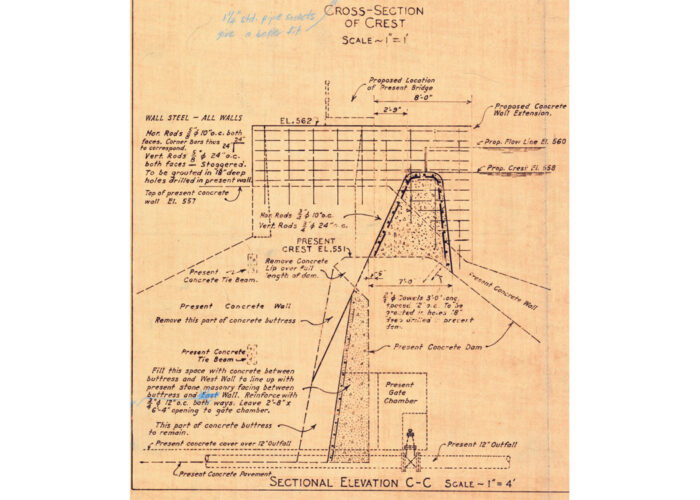
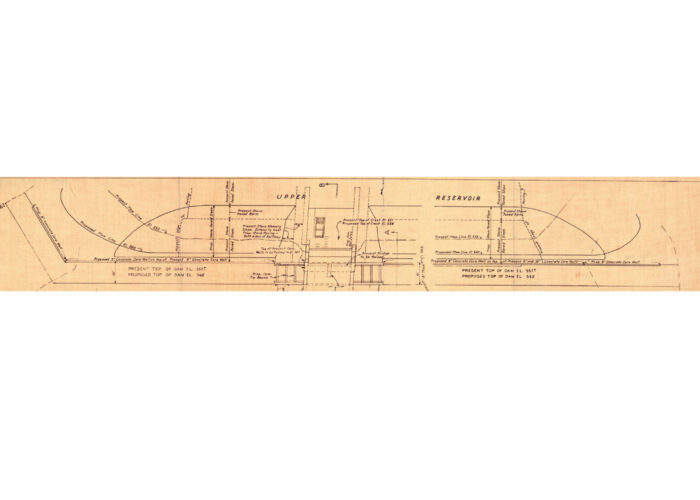
The engineering firm Weston & Sampson was hired to design the changes to the dam that increased its capacity from 5 million gallons to 12 million gallons. Ames Construction Company of Somersworth, NH, which worked on many waterworks projects throughout New Hampshire, did the construction.
1975-1992 Repairs
Despite major alterations in 1949, the aging reservoir and its large dams required frequent maintenance. Further repairs were carried out over the next 40 years that proved to be costly for the town. Many older dams have struggled to adapt to present needs like climate change and rainfall inconsistencies, new dam engineering, and changing standards for dams and reservoirs. Water precincts like the GVWP have to make difficult decisions about these historic resources that balance fiscal and preservation goals.
In 1975, cracks were found in the east abutment, and repairs were directed at fixing a leak on the upstream right side of the spillway. Engineer Francis C. Moore, a Goffstown resident and longtime engineer for the New Hampshire Water Resources Board, recommended what work should be done.
A concrete column was poured in the corner formed by the upstream face and the right-hand training wall, but other suggested work was not done, and leakage at this location would subsequently continue to be an issue.
By 1991, portions of the spillway were in a “severe state of disrepair.” A report by Henry Dufresne noted that the spillway showed evidence of multiple repairs. The drainage area to the reservoir was thought to be approximately 510 acres. Extensive repairs were made in 1992 to eliminate seepage.
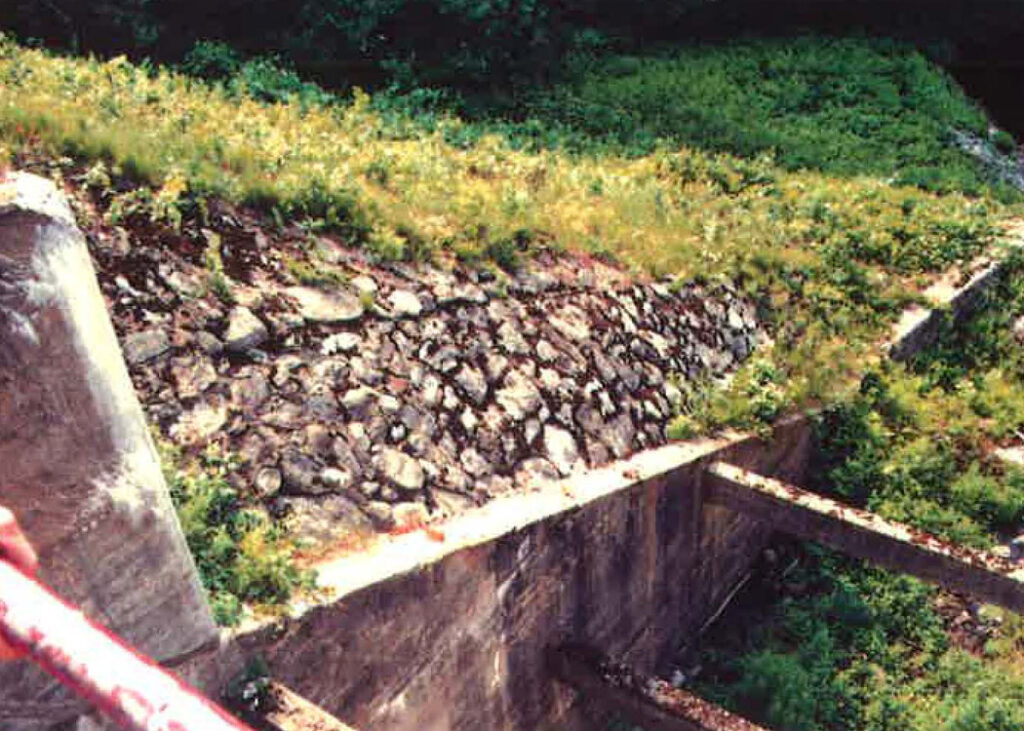
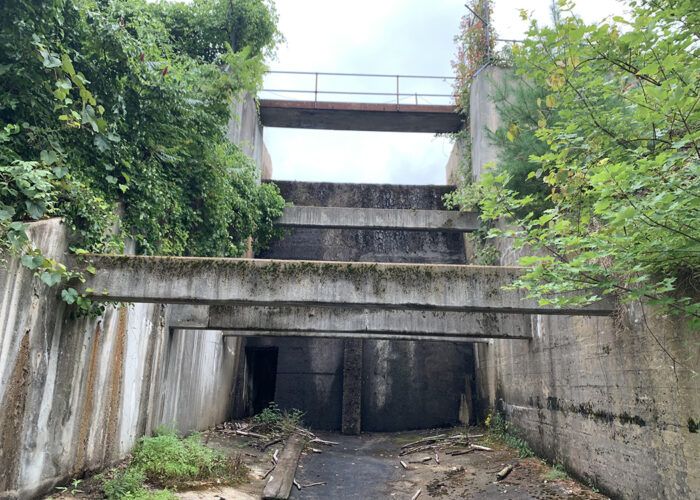
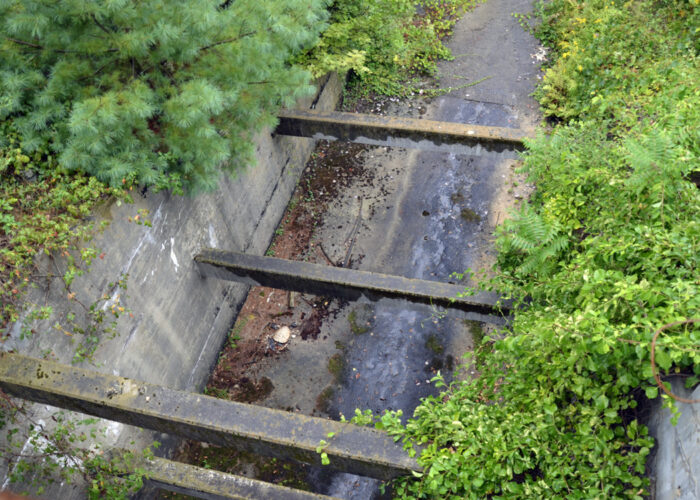
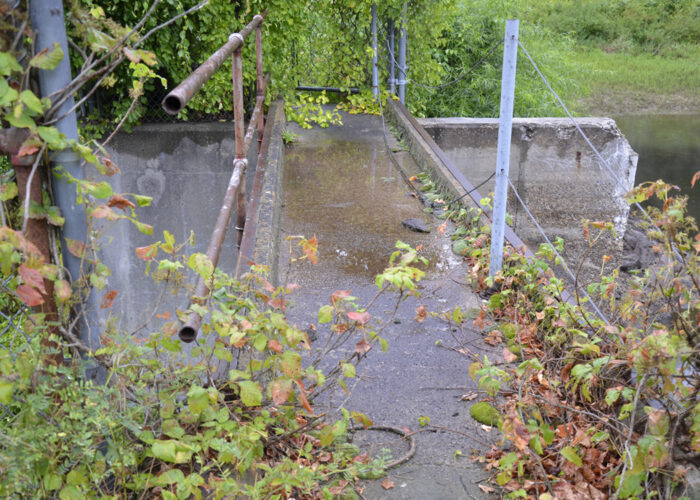
The braces were badly spalled and cracked with exposed rebar.
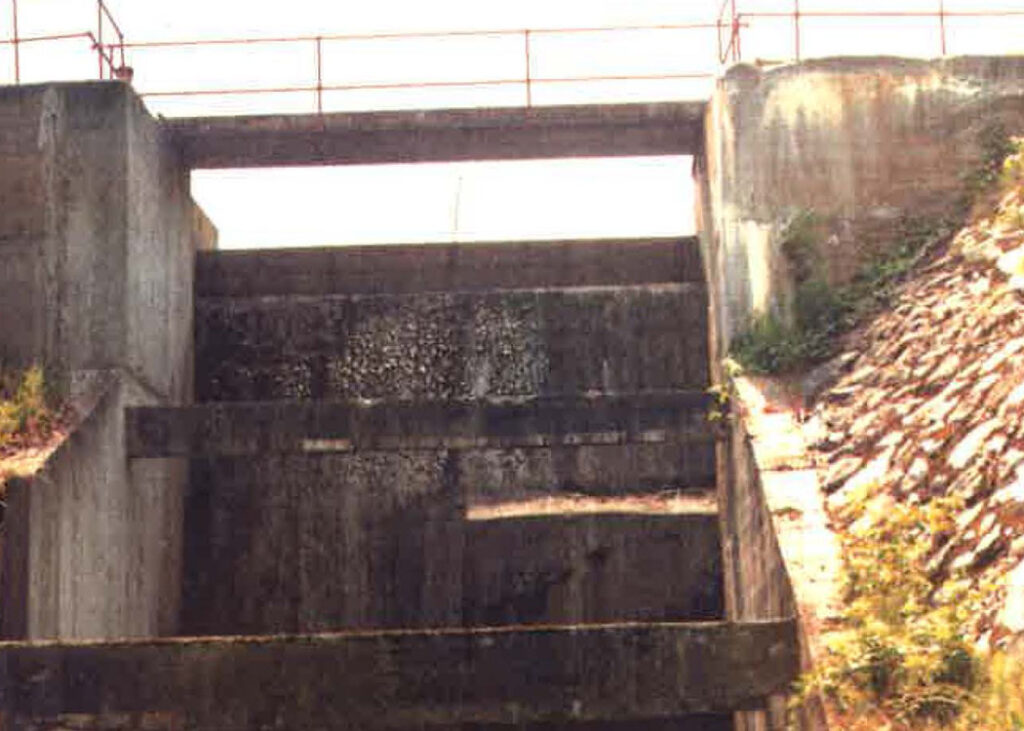
The right-side training wall was also badly chipped and cracked, with spalling in multiple other areas.
Dufresne Report
Recent History
There are several factors that led to the GVWP’s decision to decommission the Upper Reservoir, dam, and water treatment plant. Overall, it became clear that the financial burden of repairing the aging dam and water treatment plant wasn’t worth the output of water, especially given that newer engineering technology could provide more water with less investment from GVWP’s rate payers.
- With current climate conditions and less rainfall, the Upper Reservoir’s use as a backup reserve of public drinking water for 6 months out of the year was becoming increasingly obsolete.
- The 1995 water treatment plant that processed the Upper Reservoir’s water was over thirty years old and in need of expensive repairs
- The GVWP installed a well in the 1950s that pumps 300 gallons/minute from an underground aquifer, and they plan to install a third well that will pump 500-700 gallons/minute. These wells don’t rely as heavily on yearly rainfall.
- The aging Upper Reservoir Dam was in dire need of repairs and became a high hazard dam that no longer met safety standards. There were concerns about water washing over the dam and causing it to breach, jeopardizing the lower reservoir and surrounding watershed.
In October 2016, the NH DES Dam Bureau issued a Letter of Deficiency for the dam, prompting the proposed removal of the reservoir and the need for extensive repairs and assessments. In considering removal, federal and state law required a review of the 425-acre property to consider the historical, archaeological, and environmental impacts.
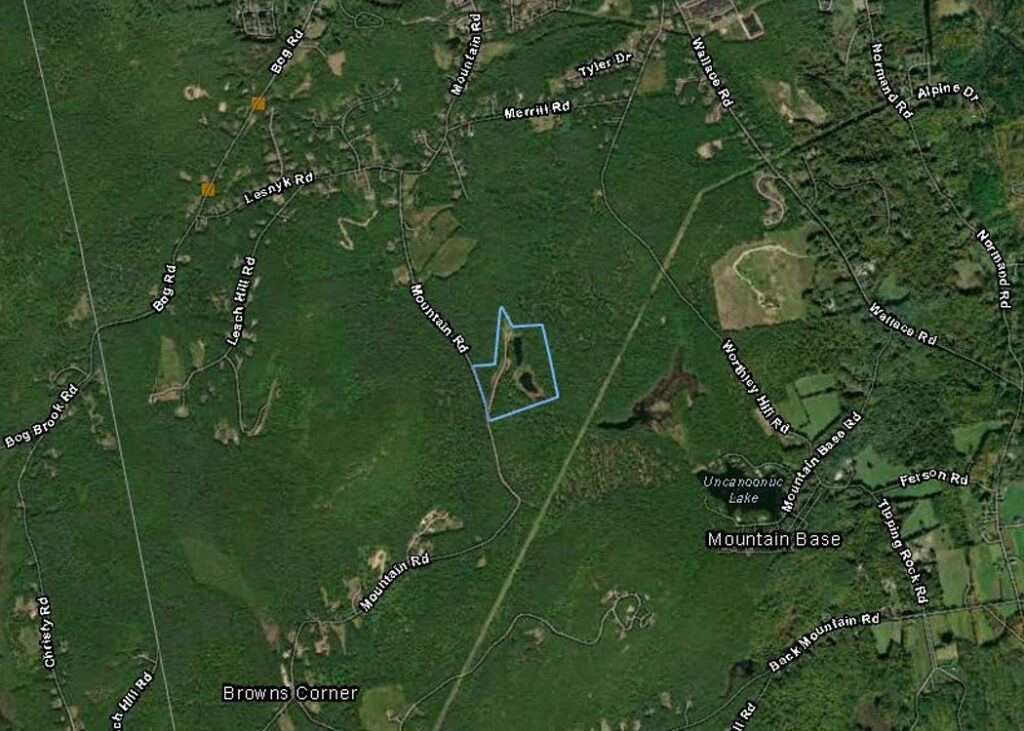
In 2025, the Upper Reservoir Dam and Lower Reservoir Dam were determined as eligible for listing in the National Register of Historic Places for the role they played in Goffstown’s development.
This designation prompted mitigation work, in the form of this historical webpage to help document and promote the history of the dam and the GVWP.
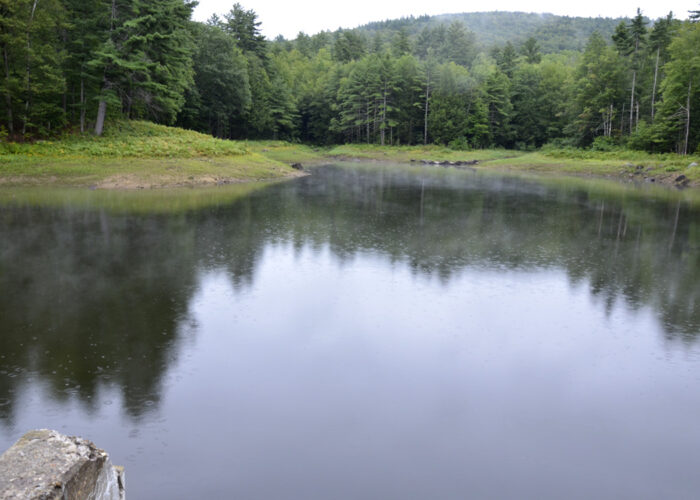
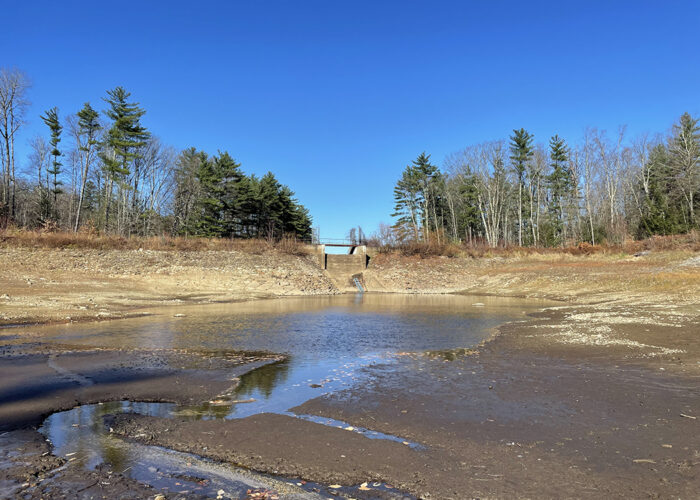 Upper Reservoir Dam and empty reservoir (November 2022) Weston & Sampson
This webpage was produced in cooperation with the U.S. Army Corps of Engineers, The New Hampshire Division of Historical Resources, and the Town of Goffstown under Section 106 of the National Historic Preservation Act. Preservation Company and BaileyDonovan 2026.